
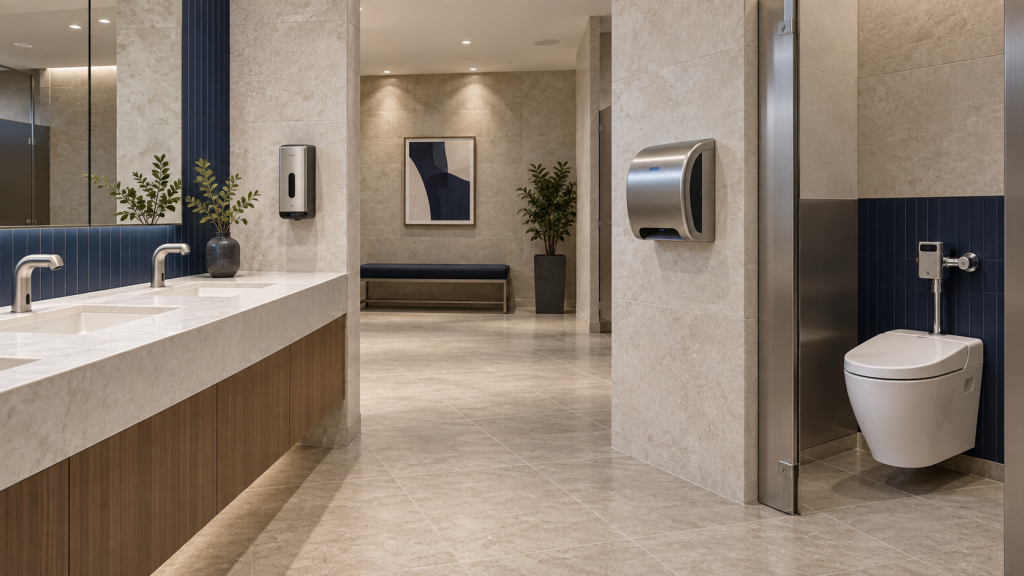
Touchless restroom products are often purchased as separate items, but project performance depends on how the sensing, water, power and maintenance systems work together. Importers and project buyers should evaluate the complete user journey rather than comparing only unit prices.
1. Start with the fixture and plumbing layout
Confirm fixture type, water pressure, inlet and outlet positions, rough-in dimensions and drainage before selecting controls. A sensor flush valve for squat pans has different hydraulic requirements from a one-piece sensor toilet. Ask for drawings and site coordination information before sampling.
2. Standardize power and control philosophy
Battery, AC and dual-power models each create different installation and maintenance obligations. A public project should document expected battery life, cable routing, transformer access, low-voltage warnings, manual overrides and behaviour after a power failure. Keep spare control modules and valves practical for the facility team.
3. Design the complete handwashing sequence
Touchless water is only one part of hygiene. Soap delivery, drying and cleaning access matter equally. A wall-mounted sensor foam soap dispenser can free countertop space, while a high-speed jet hand dryer may reduce paper consumption. Check soap viscosity, refill access, dose adjustment, dryer sound, electrical protection and filter maintenance.
4. Verify sensing in the real environment
Reflective basins, dark finishes, bright sunlight and narrow cubicles can affect sensing. Test the actual product at the proposed mounting height. Confirm sensing range, response time, timeout logic and false-trigger protection. Remote adjustment is valuable only when the commissioning instructions and remote controls reach the maintenance team.
5. Request evidence for the exact model
Do not rely on a general company certificate. Match test reports, water-efficiency documents, electrical approvals and material declarations to the model and destination market. For China sourcing, retain the factory model, approved sample, specification sheet and packaging record in one project file.
6. Plan service before purchase
Specify access panels, isolation valves, refill routes and replaceable modules. Confirm warranty terms and stock critical spares. A slightly higher initial price can be justified if the selected system reduces downtime and makes routine maintenance predictable.
Quick procurement checklist
- Approved drawings and connection sizes
- Water pressure and flush-volume validation
- AC/DC strategy and service access
- Sensor-range commissioning method
- Soap and dryer operating data
- Market-specific compliance evidence
- Spare-parts and warranty plan
Explore more plumbing fittings and commercial bathroom accessories, or contact Huayong Bath with your fixture schedule for model matching.