
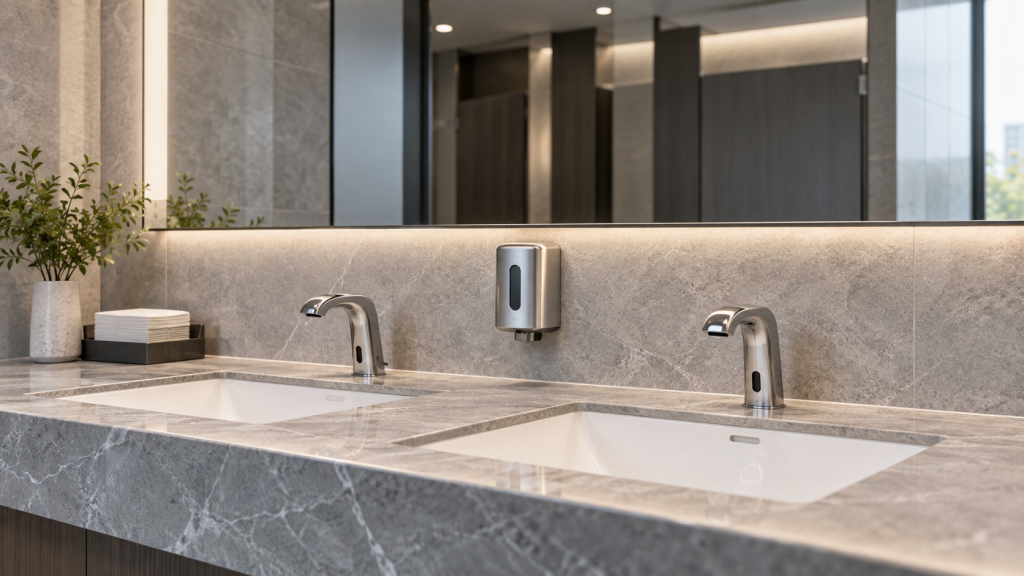
Quick answer: For a commercial touchless wash station, specify the complete system rather than the faucet alone. Confirm basin geometry, sensing distance, water supply, temperature control, power, service access and cleaning routine. Then decide whether water and soap should be in one unit or separate fixtures.
1. Define the washroom use case
A hotel guest bathroom, airport restroom and office washroom have different traffic, cleaning cycles and maintenance teams. Estimate peak use and the expected response time for a service call. These factors affect battery choice, spare parts, reservoir capacity and the number of fixtures kept in reserve.
2. Match the faucet to the basin
A touchless hot-and-cold basin faucet must put water into the bowl without false sensor triggers from the basin surface. Check spout reach, mounting hole, faucet height, splash behaviour and the sensing window under real lighting. Glossy or reflective finishes should be included in testing.
3. Specify temperature and water supply
Confirm whether mixing occurs at the faucet, upstream, or elsewhere in the plumbing system. Ask for the operating pressure range, hot and cold inlet sizes, filtration requirement and behaviour during pressure changes. Any temperature-safety claim must be supported by test evidence for the exact proposed configuration.
4. Plan power and servicing
Battery, mains and dual-power options each need a service plan. Identify how a technician reaches the battery box, sensor module, filter and solenoid valve without damaging the finished counter. Test power-failure shutoff and timeout behaviour. Compare the supplier’s stated ingress rating with the way the product will actually be cleaned.
5. Integrated soap or separate dispenser?
An integrated water-and-soap sensor faucet can simplify the visible wash station. A separate touchless foam soap dispenser offers independent replacement and refill planning. Compare installed cost, compatible soap, dose consistency, tank capacity and the consequences if one component fails.
Sample acceptance test
- Install the sample with the actual basin and supply pressure.
- Test hand detection from multiple positions and under normal lighting.
- Repeat activation to observe response and timeout.
- Run a low-battery or power-loss check as documented by the supplier.
- Test the proposed soap formula and refill method if applicable.
- Review cleaning instructions, spare parts and written compliance documents.
Start with our faucet collection and the faucet supplier checklist. To discuss a commercial programme, send your basin layout, traffic estimate and destination requirements.
FAQ
Do sensor faucets save water automatically?
Automatic shutoff can reduce unnecessary run time, but actual savings depend on flow rate, sensing settings and usage.
Is a touchless faucet hygienic without cleaning?
No. Basins, sensor windows, soap equipment and surrounding surfaces still need routine cleaning.
Should every project use one integrated soap-and-water unit?
No. Separate units can be easier to replace; compare the complete maintenance model.